Dog Health & Safety
Keeping Our Pets Healthy
Start With What's in Their Bowl
When was the last time you read the ingredients of your pet's food, or researched how it's made?
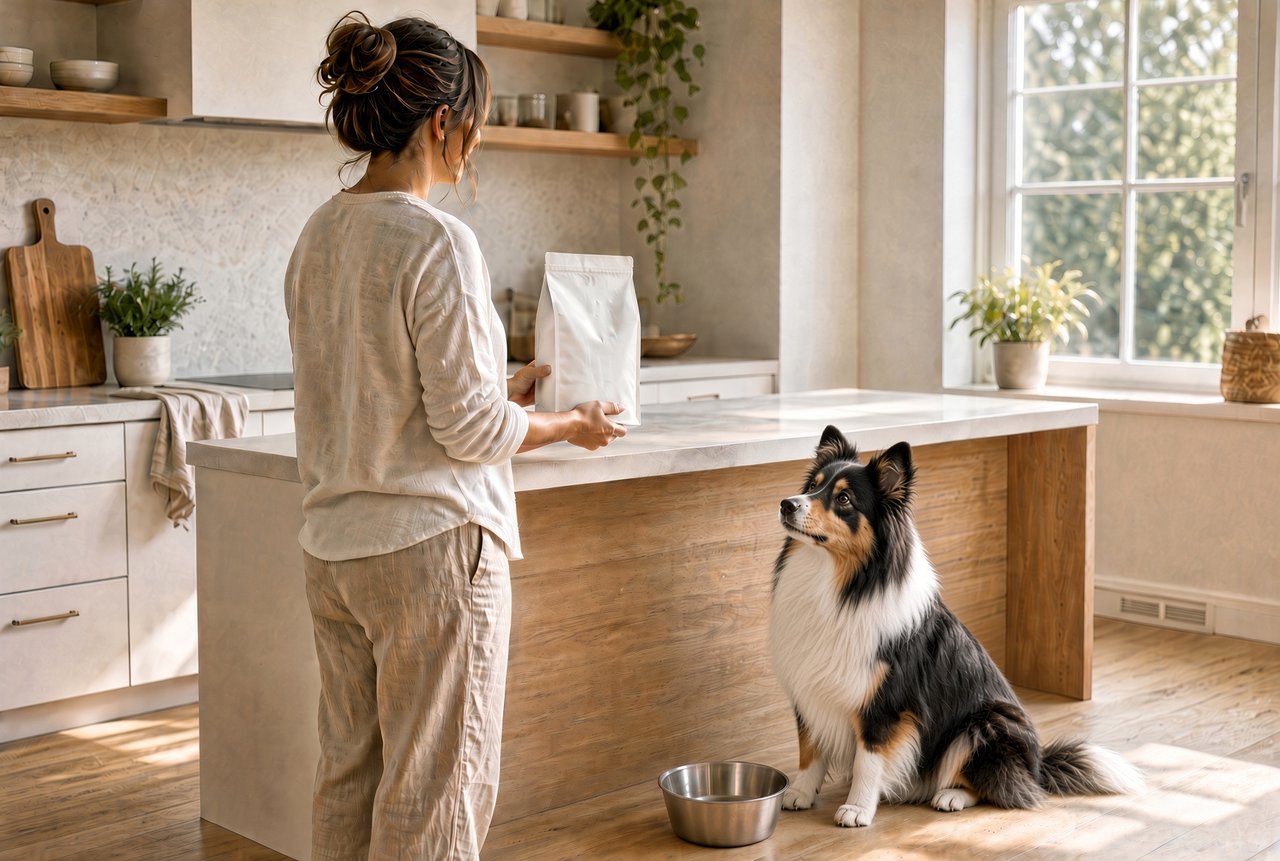
Most of us check the labels on what we buy for our families. We look for dyes, added sugar, and ingredients we can't pronounce. Yet our dogs eat the same food every day, and many of us have never looked past the front of the bag. I've learned how much our dogs depend on us for every meal and every drink, especially while our family works through a loss. That's why I want to share what I've been reading, and encourage you to look into it yourself.
Start with the label
Pet food labels contain more information than most of us realize. Here's what I look for:
- The AAFCO statement. Look for wording that says the food is "complete and balanced" for a specific life stage, such as adult maintenance or growth.
- The ingredient list. Ingredients are listed by weight, so the first few tell you what the food is mostly made of.
- The manufacturer's name and location. Look up the company yourself. Who owns it, where the food is made, and whether it has had recalls are all easy to find.
Questions to research on your own
Most of the answers are easier to find than we think. Before you buy a food, try to answer these for yourself:
- Where do the proteins and fats come from? The company website, its sourcing statements, and its product pages often say.
- Has this food or this company been part of a recall or withdrawal? Check government recall listings, and independent news coverage.
- Does the company describe how it tests finished products? Look for a quality or sourcing page. If it says nothing, that's worth noticing.
- Who else has reported problems? Pet owner complaints, veterinary reports, and news coverage often show patterns.
If you can't find an answer after a real search, that tells you something too. Take that into account when you choose a food.
Use common sense when research is still catching up
Some concerns about pet food don't have large studies behind them yet. That doesn't mean the concerns are wrong. It means the research hasn't caught up. When something seems off, I'd rather look harder for answers than assume there's nothing to worry about just because no one has studied it.
Common sense is a good guide here:
- If a product's ingredients don't match what the label implies, look into it before you buy.
- If a food changes suddenly, notice whether your dog's energy, stool, weight, or coat changes too.
- If your dog develops new symptoms, tell your vet exactly what they've eaten recently, including treats and scraps.
Where to look: independent sources
No single source deserves blind trust, including the ones listed here. Every organization has a stake in something, so the useful question is who pays for the work and whether they show their methods. These sources generally meet that test:
- Clean Label Project (cleanlabelproject.org): a nonprofit that publishes contaminant testing, including pet food. Check the methods and the date of each report.
- Consumer Reports (consumerreports.org): a member-funded nonprofit that has tested pet food. Check whether a current review exists for the product you're considering.
- Independent testing labs, such as Ellipse Analytics, which conducted tests in a recent pet food investigation. A lab's results are only as useful as its published methods and sensitivity limits, so ask what it tested for.
- Morris Animal Foundation (morrisanimalfoundation.org): donor-funded canine health research with public study data.
- Tufts Cummings School of Veterinary Medicine and Cornell University College of Veterinary Medicine: university programs that publish owner guidance and research.
- Peer-reviewed veterinary journals, such as the Journal of the American Veterinary Medical Association and the Journal of Veterinary Internal Medicine. Abstracts are free, and many studies are open access.
- WSAVA (wsava.org): a veterinary association that publishes nutrition guidelines written by clinicians.
- Board-certified veterinary nutritionists (find one through the American College of Veterinary Nutrition): they can review a specific food or diet and often have no product to sell.
How to judge any source
- Who funds it? Look for disclosures, membership structure, and sponsors.
- Does it show its methods, sample size, and test limits?
- Does it name the specific products and dates it tested?
- Does it have a financial stake in the answer, such as selling food or a supplement?
Do your own research, then bring it to a specialist
I'm not a veterinarian, and I'd never ask you to take my word over anyone else's. What I'd encourage is that you read widely, check the sources, and then talk through what you've learned with someone who has the training to evaluate it. For diet questions, a board-certified veterinary nutritionist (look for the DACVN credential through the American College of Veterinary Nutrition) is the right person to ask. Ask whether they have any industry ties, and let that inform how much weight you give their advice.
Small habits that add up
- Keep a written list of what your dog eats, including treats, and share it with anyone who cares for your dog.
- Make food changes slowly, over one to two weeks.
- Keep fresh water available, and clean bowls regularly.
- Schedule regular checkups, and mention anything that seems different.
- Keep your dog at a healthy weight, since that supports nearly every other part of their health.
A personal note
To me, it's already unfair that we get so little time with the ones who show us so much love, affection, and loyalty. I can't say it hurts any more or less when they're taken from us before the time they should have had. When you love your pet like a member of your family, it hurts no matter how they pass.
So I write this in the hope that it helps give you one more day, one more week, one more month, or even years with your family member. That is my wish for you.
Our dogs trust us completely. The best thing we can do is pay attention, do the research, and make decisions based on the best information we can find. Your dog can't read a label, so it's up to us to read it for them.
