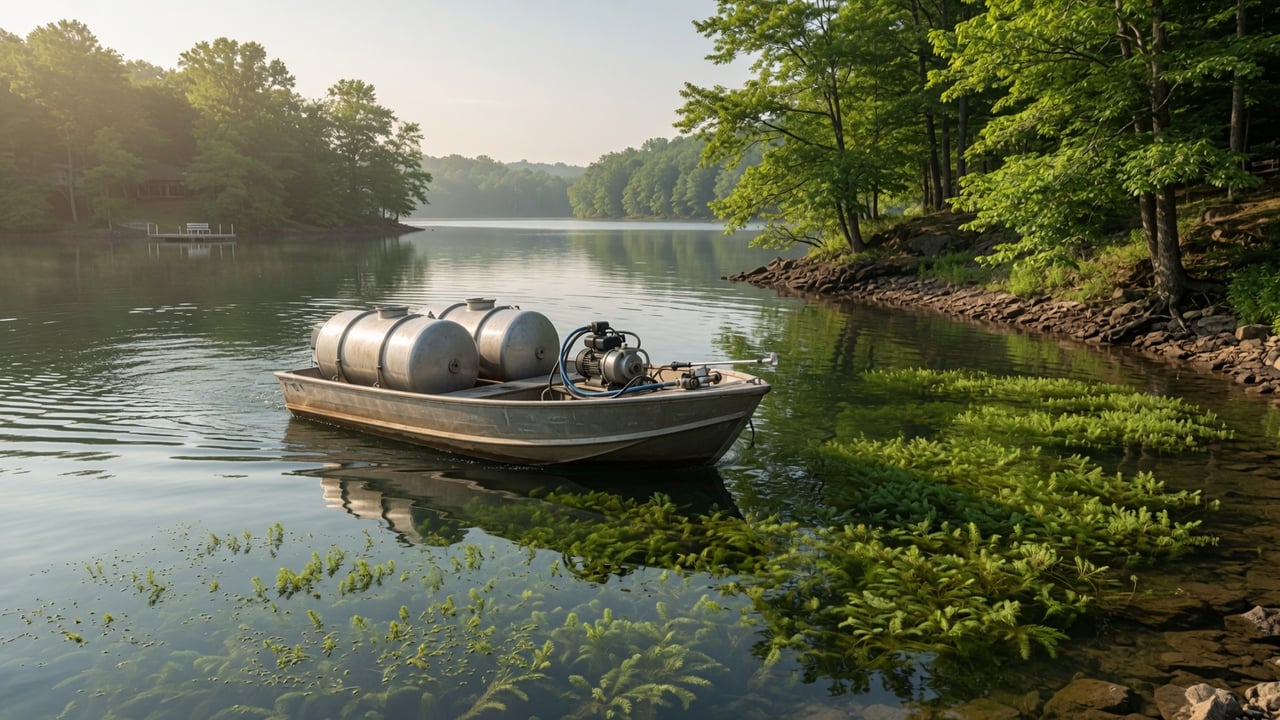
Crews treated 16 public-side locations in mid-July, with grass carp and state funding backing the longer fight. Here's what got treated, who pays for it, and what it means for your cove.
If you saw treatment boats working the shoreline in mid-July, here's what they were up to, and why it matters for every dock, cove, and swim area on the lake.
What Happened
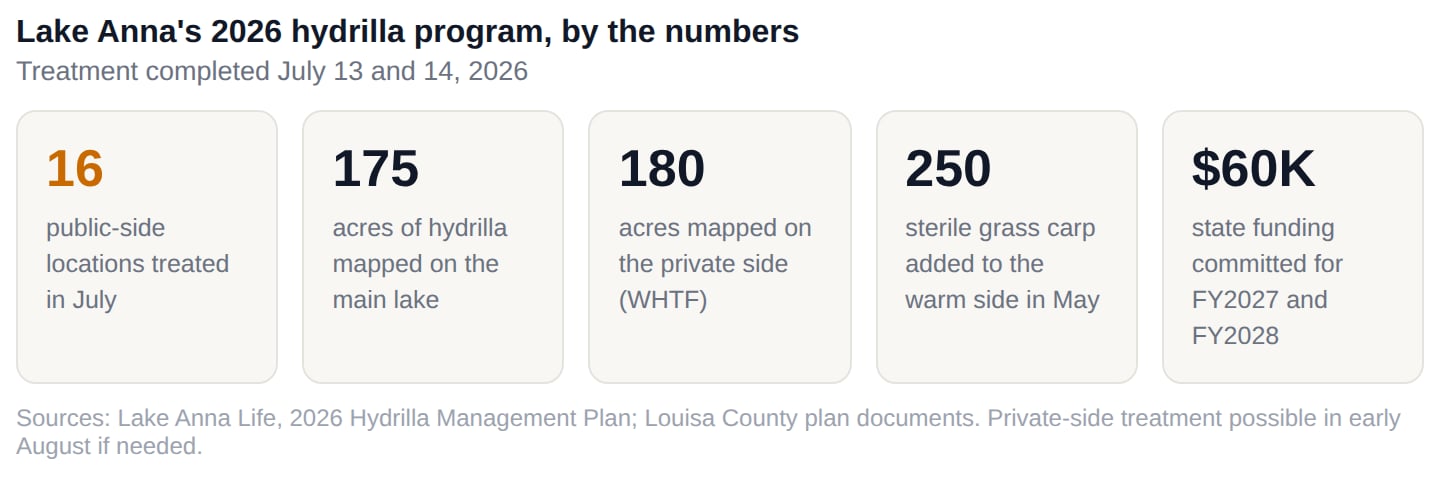
On July 13 and 14, crews completed this year's hydrilla herbicide treatment across 16 locations on the public side of Lake Anna. This year's surveys mapped roughly 175 acres of hydrilla on the main lake, plus about 180 acres on the private side (the Waste Heat Treatment Facility). If conditions call for it, a private-side treatment could still happen in early August.
For anyone new to the lake: hydrilla is an invasive aquatic plant that grows fast, mats up at the surface, tangles props, chokes swim areas, and crowds out native vegetation. Left alone, it takes over coves. Managed well, it stays a nuisance instead of a problem. Lake Anna has been managing it aggressively, and this year's program is the most organized the effort has looked in years.
It's Not Just Herbicide
The treatment days get the attention, but the longer game is biological and financial.
Grass carp: Sterile grass carp were stocked on the public side this spring, and another 250 triploid carp went into five areas on the warm side in May. The carp eat hydrilla year-round, long after the treatment boats go home.
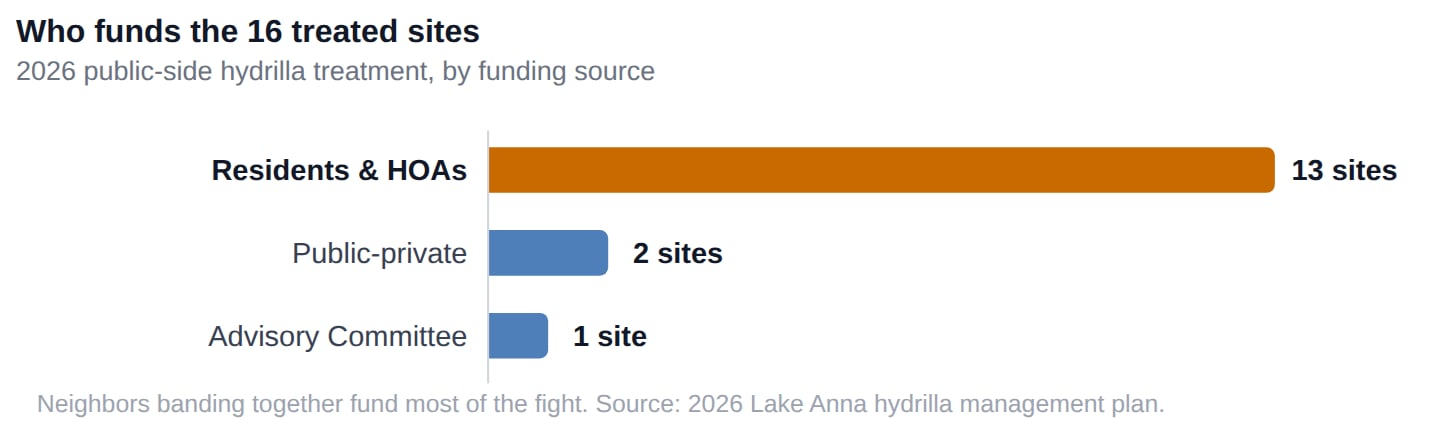
Funding: The mix this year included one area funded by the Lake Anna Advisory Committee, two public-private partnerships, and thirteen areas funded by residents and HOAs banding together. That resident participation is a big reason coverage keeps expanding: the neighborhoods that organize are the neighborhoods that get treated.
State money: The state budget includes $30,000 per year for Lake Anna hydrilla management in each of the next two fiscal years, so the program has runway through 2028.
Add in the annual survey work that maps exactly where the hydrilla is, and you get a program that's proactive instead of reactive.
Why This Matters If You Own (or Want to Own) Here
Water quality and usability are the foundation of every waterfront property value at Lake Anna. A cove that stays swimmable and boatable is worth more than one that mats over every August. When you're evaluating a waterfront property, a few questions worth asking:
Has this cove been part of a treatment area, and who funds it? Is the HOA or neighborhood organized enough to participate in resident-funded treatment? How does the shoreline look in late summer, when hydrilla peaks?
These are questions we help buyers and sellers work through all the time. Between hydrilla management, this summer's water levels, and dock permitting, buying waterfront at Lake Anna rewards local knowledge. That's the part we bring. If you're thinking about buying at the lake or selling your Lake Anna home, we're happy to talk through how your specific cove fits into the picture.
Where to Follow Along
The Lake Anna Civic Association tracks hydrilla management, water quality, and safety updates all season at lakeannavirginia.org. Lake Anna Life published a detailed rundown of the 2026 management plan, and Louisa County posts the official plan documents on the county site.
One more date for the calendar: Louisa County students head back to school on Wednesday, August 12. Two more weekends of full summer. Make them count.
Questions about your shoreline, your cove, or your plans at the lake? Reach out anytime at [email protected] or 540-870-0437.
Sources: Lake Anna Life, "2026 Hydrilla Management Plan Begins with Annual Surveys, Treatment on Main Lake and WHTF in July"; Louisa County 2026 hydrilla management plan documents; Lake Anna Civic Association.
