Dog Health & Safety
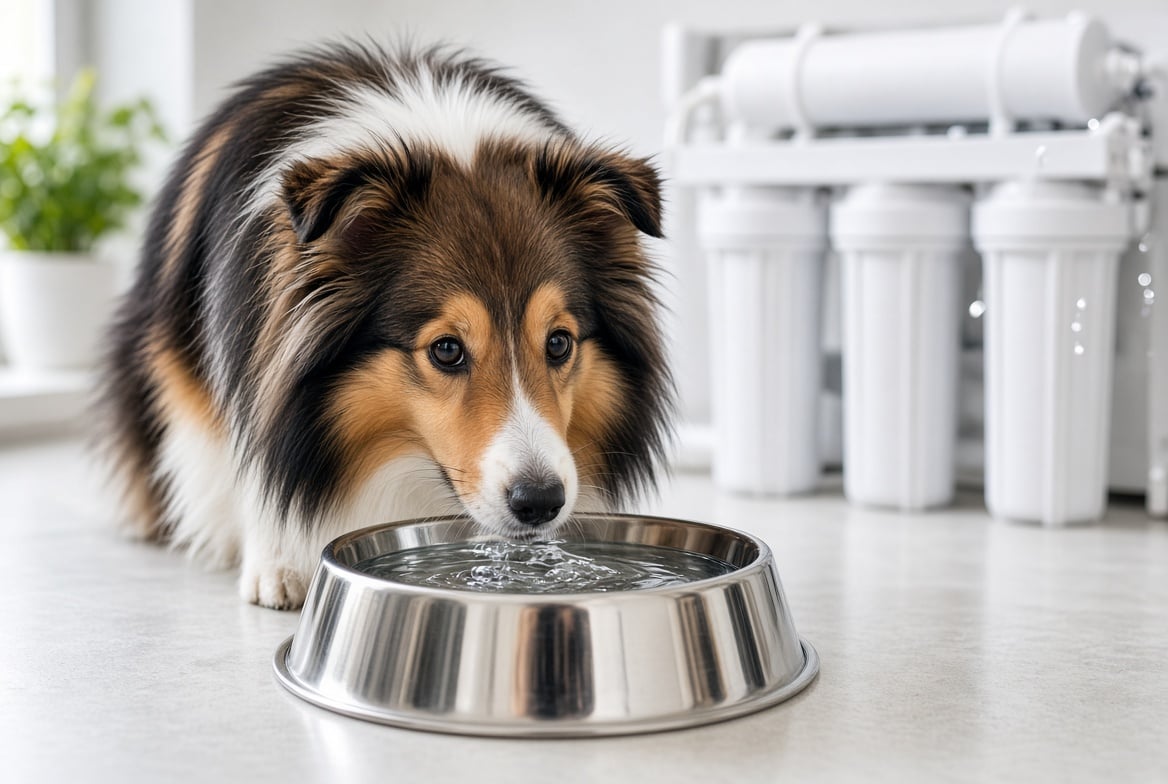
Reverse Osmosis Water for Dogs
What the Evidence Shows
Water is the nutrient dogs need most, and it's the one owners think about least. Most of the time, tap water is safe for a dog. Sometimes it isn't, and that's when water quality becomes a health question. This blog looks at what reverse osmosis (RO) filtration does, what it doesn't do, and how to decide whether it makes sense for your dog.
What we saw firsthand
We recently met Sue, a Sheltie breeder who has been breeding for 40 years, she was a scientist and her husband retired in the water industry. We met several Shelties in their care who were 15 and 16 years old; we reviewed her records and she shared what she has been doing with her dogs for 40 years that she contributes to the extended life of her dogs. To put this context for you, the average age of shelties is 10-14 years. Another breeder, Lilian, who is the breeder we got our other shelties from, said her dogs she breeds live around 10 years and there are many other sheltie breeders whose dogs live 10 years on average as well. To see Sue's dogs living 15 and 16 years was amazing to us! There was a 15 year old who was just a happy pup, jumped on the couch and took a nice gentle nap, we loved seeing this.
This breeder strongly promotes reverse osmosis water, and she personally believes it is part of why her dogs live long, healthy lives. She also instructs the people who adopt her dogs to keep the dogs on her recommended diet and water plan, when they do, their dogs are seeing the same longevity in their life span with minimal to no disease or cancer. For those who do not follow her guidance, they see 8-10 years of life in their dogs and may develop various forms of cancers during their life. When she breeds, she wants her dogs to all have a long healthy life, in contrast there are other breeders who breed dogs just for "shows," competition and looks and not for them to have a long life which shows in their life span.
This is her view, and we're sharing it as hers. We haven't found scientific evidence that RO water extends a dog's lifespan, so we're not presenting it as proven. We will share her recommendations on water and diet so you can weigh them yourself.
We believe her, and we have installed a reverse osmosis system in our home for ourselves and our pets. That was our decision based on her experience and our own wish to give our dogs the cleanest water we can. We're sharing it as a personal choice, not as proof that RO water extends life. Before making a change like this for your own dogs, test your water and talk to your vet about their mineral needs.
Water is a basic part of care, and it deserves the same attention you give food, weight, and vet visits. Test what your dog drinks, understand what your filter does, and talk to your vet before making big changes.
What RO filtration removes
An RO system pushes water through a semipermeable membrane that blocks most dissolved substances. Depending on the system and how well it's maintained, it can reduce:
- Lead and other heavy metals
- Fluoride
- Nitrates, which can come from agricultural runoff and well water
- Chlorine and chloramine, along with their byproducts
- Many bacteria, viruses, and parasites
- Total dissolved solids, including much of the calcium and magnesium in hard water
For a household with contaminated or untested well water, that can be a meaningful improvement.
What RO filtration also removes
The same process removes minerals your dog normally gets from water. Calcium and magnesium are both removed, and they matter for bone and nerve function. Dogs get most of their minerals from a balanced diet, so RO water alone is not a substitute for complete nutrition. If your dog drinks only RO water and eats a homemade or unbalanced diet, a veterinarian or veterinary nutritionist should review the plan.
When RO makes sense
- Your water has tested high for lead, nitrates, or other contaminants
- You're on private well water that hasn't been tested
- Your municipal water report shows a problem you want to address
When it may not be necessary
- Your water tests clean and your municipal supplier meets standards
- Your dog's vet has no concerns about your water or your dog's hydration
- You're considering RO because it sounds purer, without a specific reason
Is there evidence it extends lifespan?
There's no strong clinical evidence that RO water extends a dog's life. But also keep in mind studies for dogs are not as robust as they are for humans, the information and studies we have to go off for dogs is minimal compared to studies for humans. Water quality supports overall health by reducing exposure to contaminants, and that's a reasonable goal. Lifespan depends on genetics, weight, diet, preventive care, and environment, and water is one part of that picture. (Which we will also cover as part of Bolt's corner, so stayed turned to more blogs.)
Why the research is hard to read
Unlike people, dogs don't have a national system that tracks cancer, heart disease, or liver disease. Most pets are never counted, and many conditions are only diagnosed once a dog is sick enough to see a vet. The studies that do exist often use different methods and cover different breeds and time periods, so it's difficult to say with confidence whether these diseases are becoming more common. It's even harder to pin down their causes. Genetics, weight, age, diet, and environment all appear to play a role, and they often overlap.
What we do know is that good habits support overall health. A balanced diet, a healthy weight, clean water, and regular vet checkups are the things within our control. They can't guarantee a longer life, but they are a sound foundation for caring for a dog.
Practical habits for any dog
- Test your water before choosing a filter, and retest on a regular schedule
- Change filter cartridges on the manufacturer's schedule
- Offer fresh water at all times, and refill bowls throughout the day
- Clean bowls daily, and choose stainless steel or ceramic over plastic, which can hold bacteria in scratches
- Ask your vet about mineral needs before changing your dog's water source or diet
- Watch for signs of dehydration, such as dry gums, lethargy, or reduced appetite, and call your vet if you notice them
What we did to start
We went on Amazon and found a RO system to get installed in a faucet in our house. We paid $329 for the iSpring RCC7AK-UV system, (the breeder used a different option that was a little than $200), then we hired a contractor to come and install it. We will use that faucet for all the dogs drinking water. When we cook their chicken and rice, etc. it will be cooked in RO water as well. This was a very specific request she had. For example, our dogs have boiled chicken and rice in their diet and we will use RO water in the pan to cook and boil their chicken in and for the rice and / or veggies those too will be cooked in RO water.
In addition, for the hard food also added to their diet, there are very select brand(s) that cooks the food in RO water. Many brands do not cook the dog food in RO water. We have personally changed our dogs to the brand that cooks the food in RO water.
